

Stop Optimizing for Clicks - Start Optimizing for What Actually Matters

I just finished another restaurant ad account audit.
Almost every time it's the same story: everyone's optimizing for attention - views, clicks, likes.
It feels alive on the surface. You can open Ads Manager and watch the numbers rise. The dopamine hits. The team clinks coffee cups because "the campaign is working."
But the dining room? Crickets.
The Boosted Post Trap
Here's what usually happens.
Someone films a reel, writes a punchy caption, and taps the blue Boost Post button.
Meta does what you asked it to do. It finds people who will watch, like, and leave a comment. Maybe you even see a bump in followers.
And yet, nothing moves on the calendar. Friday night still has empty tables. The private dining room is still dark.
That's not because the creative was bad. It's because the goal you fed the platform was detached from revenue.
The Metrics That Actually Matter
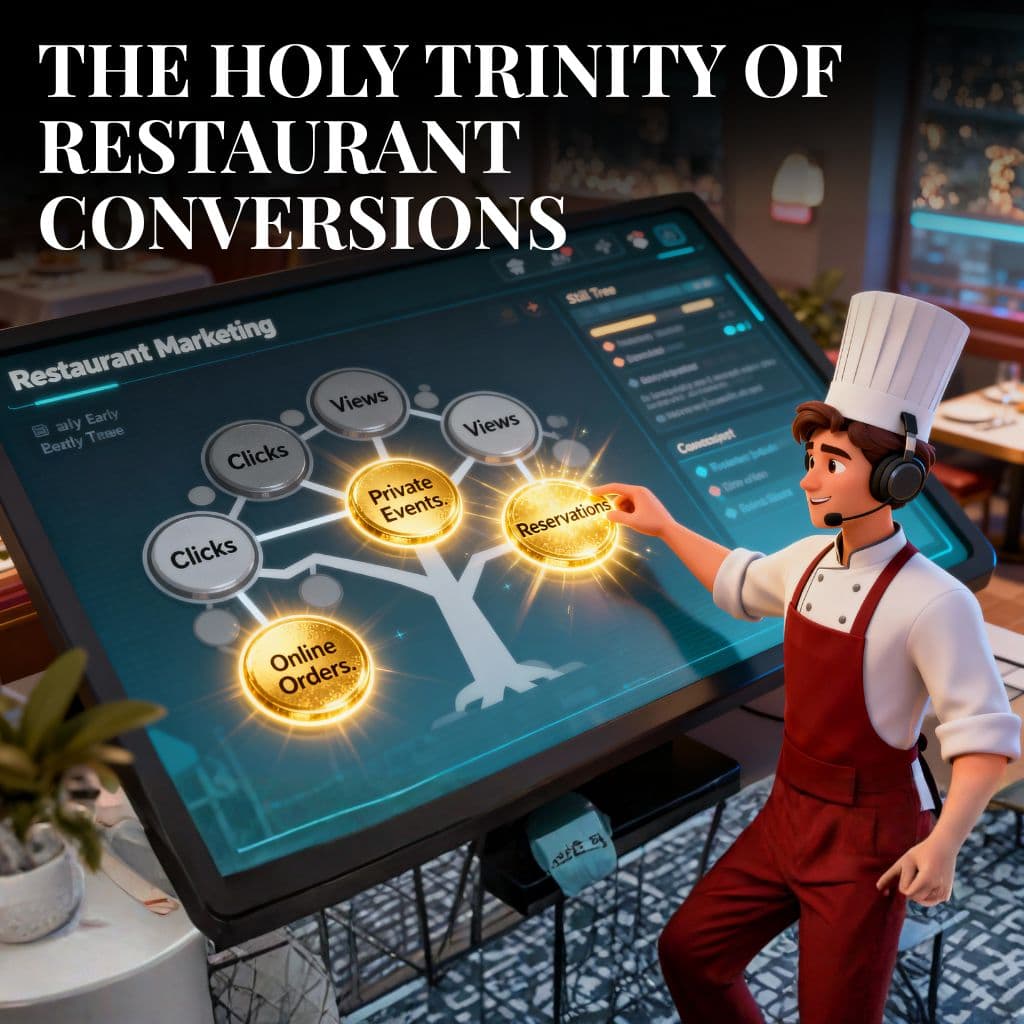
In restaurant marketing, there are really only three conversion events worth obsessing over:
- Reservations
- Private event inquiries
- Online orders (to a lesser extent)
Reservations and private events put money on the calendar. They let you predict cash flow, staff intelligently, and manage inventory.
Online orders are fine. They're the dessert cart - nice to have, but they don't anchor future business. If you're going to let a platform learn, teach it to recognize the moments that actually move revenue.
Why Most Restaurants Don't Track Them
Because it gets messy fast.
Every restaurant uses something different: OpenTable, SevenRooms, Tock, Google, a random WooCommerce plugin, or someone's inbox.
Private event leads are even wilder. Half of them come through DMs. The other half arrive through forms that your website quietly sends to an email address nobody checks.
So operators skip the tracking. They tell themselves they'll come back to it. Meanwhile, the ad platform learns that their goal is "link clicks" and obliges.
The Data Problem You Can Actually Fix
Meta, Google, TikTok - they're machines that learn from the feedback loop you close.
If you only send them click data, they'll keep serving your ads to the clickiest people on the internet.
If you send reservation confirmations, private event form submissions, or phone call conversions, they start looking for more people who take those actions.
That is when ad spend compounds instead of disappearing. According to Meta, advertisers who track true conversions see up to 36 percent lower cost per result on average.[1]
Your Move
If you're not optimizing for reservations, private events, or at least online orders, start there.
Get one conversion event set up properly. Pipe it back into the ad platform. Let the algorithm observe what a high-value guest looks like for your restaurant.
Once that works, layer in the next event. Keep feeding better data. Watch the algorithm graduate from "people who like restaurant photos" to "people who actually book a table."
Need a hand wiring it all together? Email support@guestgetter.co. We'll help you get the plumbing right.
Cheers,
Kyle
[1] Source: Meta Business Help Centre, "Optimize for Conversions" study (2023).